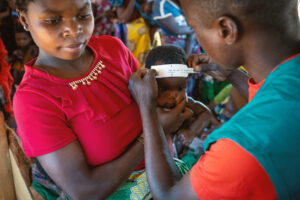
A mother takes her infant for a health check-up in Upajo Village, Mozambique, July 2024. Photographer: Rich Townsend
At the end of September, communities in northern Mozambique celebrated a milestone toward easier access to health care. Three new facilities in Cabo Delgado province were inaugurated as part of the final phase of a six-year project — funded by Canada — to support the sexual and reproductive health and rights of women and adolescents in the region.
Building a healthier future for adolescents and youth: Ocua, Chiure District
On September 24, a new space for youth opened its doors at the Ocua Health Centre. The centre provides a welcoming space where adolescents and young people — especially girls and persons with disabilities — can access confidential, high-quality services in sexual and reproductive health, menstrual hygiene, mental health, and nutrition. This investment of 3.8 million Meticais (over $82,000 CAD) will help more than 3,500 adolescents and youth aged 10 to 24.
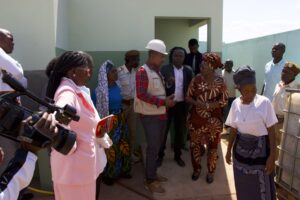
SPARC project staff, journalists, government officials, and community members arrive at the Ocua Health Centre on September 24, 2025. Photo courtesy of AKF Mozambique.
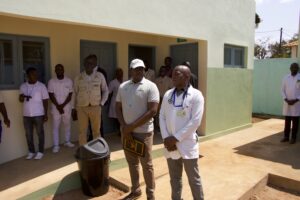
SPARC Project staff and medical workers stand outside the Ocua Health Centre on September 24, 2025. Photo courtesy of AKF Mozambique.
This inclusive approach ensures that young people have the information, care, and confidence they need to make healthy decisions and lead fulfilling lives.
Strengthening community health systems: Metata, Balama District
On September 29, the community of Metata celebrated the reopening of its updated and modernized health centre. The upgraded facility includes a new maternity ward, renovated outpatient block, modern waste management system, improved water supply and solar energy systems, and accessible sanitary facilities. The health centre was made possible by an investment of 24 million Meticais (over $500,000 CAD) and will benefit more than 12,000 people.
With these improvements, residents now have access to health care that is not only closer but also safer, more efficient, and more patient-focused.
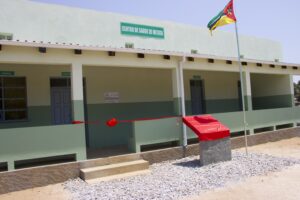
The rehabilitated Health Facility in Metata. Photo courtesy of AKF Mozambique.
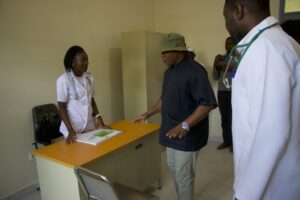
The Governor of Cabo Delgado Province engaging with health professionals from Metata Health facility on September 2025. Photo courtesy of AKF Mozambique
Promoting safe and dignified births: Namuno District
The month concluded with the inauguration of a new maternity ward in Namuno District on September 30. Designed to provide emergency obstetric and neonatal care, the new facility promotes dignified care for women and their babies. The maternity ward was made possible through an investment of 44 million Meticais (over $950,000 CAD) and is estimated to benefit over 70,000 women of reproductive age and their newborns.
This new ward is a crucial step in reducing maternal, newborn, and child mortality, helping ensure that every woman can give birth safely and with dignity.
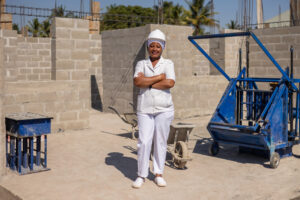
The maternity ward before completion: nurse Suraia Parte stands in front of the maternity ward as it underwent construction in July 2024. Photographer: Rich Townsend
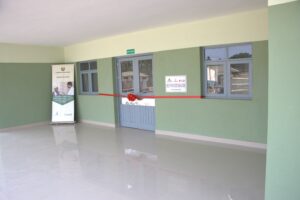
The completed Namuno maternity ward, on the day of the ribbon-cutting ceremony, September 30, 2025. Photo courtesy of AKF Mozambique.
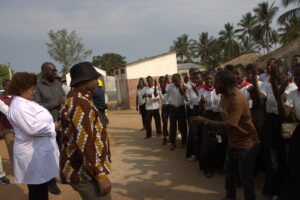
The community in Namuno welcomes project staff, medical staff, and government officials on the day of the Namuno maternity ward opening. Photo courtesy of AKF Mozambique
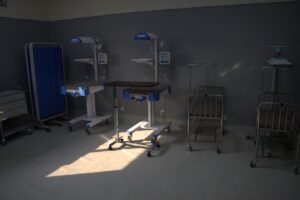
New medical equipment at the new maternity centre in Namuno. Photo courtesy of AKF Mozambique.
Shared impact, lasting change
Together, these three milestones reflect a shared mission: to strengthen health care systems and promote the rights of women, girls, and youth in Cabo Delgado.
Funded by Canada and AKFC, the six-year Strengthening Partnerships to Advance Sexual and Reproductive Health and Rights of Women and Adolescents in Cabo Delgado, Mozambique (SPARC) project advances the sexual and reproductive health and rights of women, girls, and youth across northern Mozambique while strengthening the overall health system. In addition to upgrading health facilities, the project has provided extensive training for healthcare professionals, supported mobile and outreach health services and worked with communities to address gender and social barriers that contribute to poor health outcomes. As SPARC nears its final stage, its legacy of collaboration, inclusion, and empowerment continues to grow — creating a lasting impact on the communities it serves. The legacy and results of SPARC will be carried forward by the new STRIDES project. Learn more about STRIDES.