By Caro Rolando
This article was originally published in Global Citizens 2026, a special issue of Canadian Geographic magazine that explores how youth, educators, and communities are engaging with global challenges and opportunities in an increasingly interconnected world.
Henry Ssendagire’s parents wanted him to be a doctor — and in a way, he is.
Ssendagire is a Climate Resilience Coordinator at Aga Khan Foundation Uganda in Kampala, where he supports small scale farmers and their families in building sustainable livelihoods.With a masters in crop science, Ssendagire began his career in commercial agricultural production. Since then, his approach to farming has undergone a 180, with extensive training in regenerative agriculture. It’s farming that focuses on conservation and rehabilitation, through reviving soil health, recycling water, and increasing biodiversity.
“You’re kind of like a doctor, but not to people — to soil,” says Lorenzo Luis Peñate Lara with a smile. “A soil doctor.”
The sudden observation makes Ssendagire laugh. He and Peñate Lara met last July when Peñate Lara moved to Kampala, Uganda as part of Aga Khan Foundation Canada’s International Youth Fellowship. The nine-month program offers young Canadians the chance to gain practical global experience in international development.
Peñate Lara holds a Bachelor’s in Business Administration from York University in Toronto. Following graduation, he worked for a technology startup, where he focused on business development and partnerships. Beyond the boardroom, Peñate Lara describes himself as a human rights defender who advocates for community-led efforts.
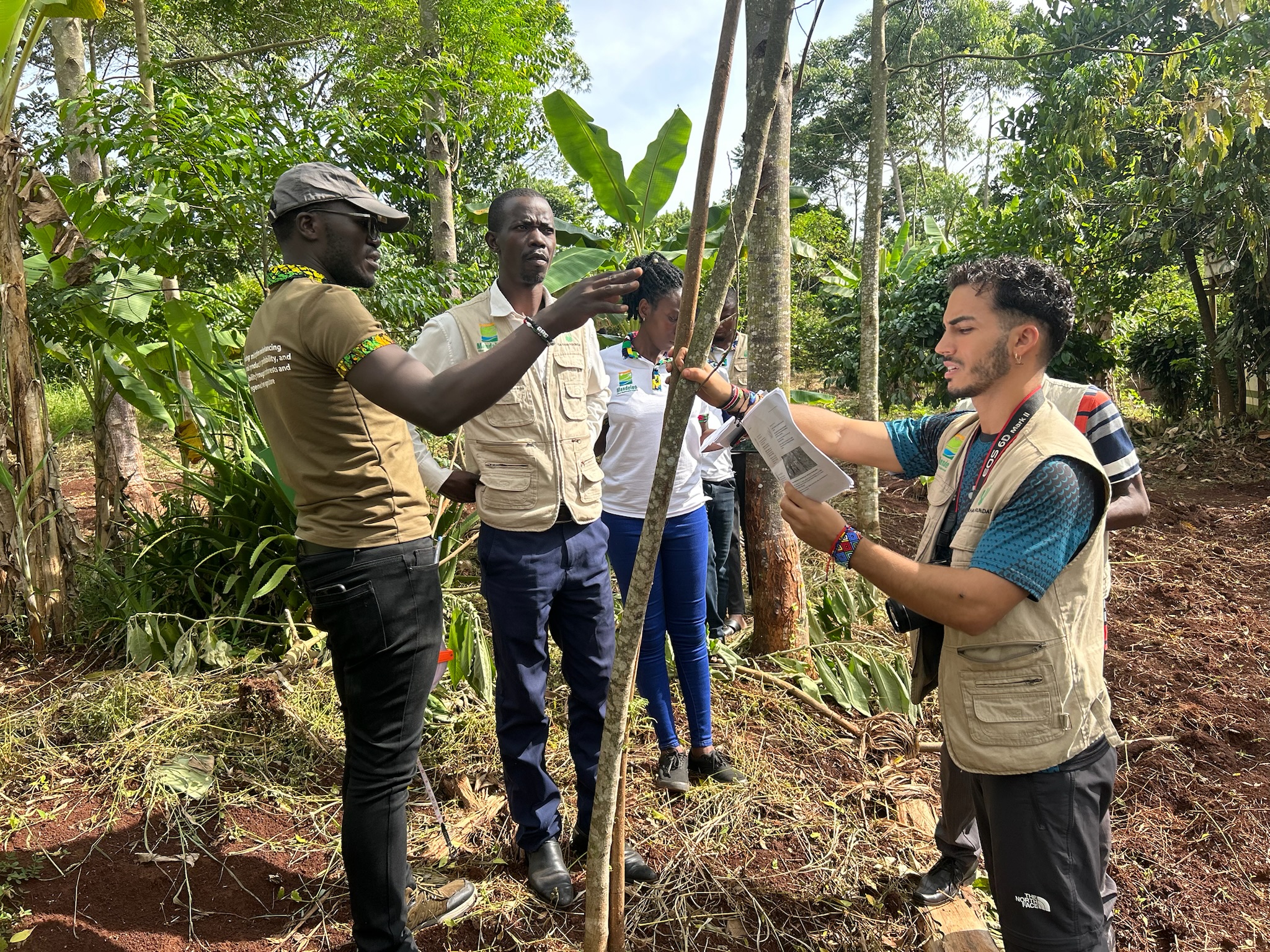
At Aga Khan Foundation Uganda, he is a Climate Resilience Fellow, and Ssendagire is his supervisor. Together, they work on initiatives like the Maendeleo Project, which empowers farmers to adopt nature-based approaches to tending to their crops, like using biospray instead of pesticides.
While their approach is rooted in a technical understanding of agricultural sciences, it is underpinned by a sense of reciprocity that shows how much people can learn from one another when they’re open to it.
We sat down with Ssendagire and Peñate Lara to learn more about the experiences that shaped their love for the land and the people who depend on it.
On their early experiences
HS: I grew up in the middle of the slums of Kampala. Even in those slums, I always had maize growing somewhere. I didn’t learn it from anywhere. I just saw that when you put seeds [in the ground], they start germinating. The beginning of it all was me just doing it myself, with that inquisitive mind. I like the fact that you take care of a plant, and they grow up as you’re watching. It’s rewarding, and at the end of the day, everyone needs that service. So if you really do it well, you contribute a lot to a lot of people’s lives.
LPL: Growing up in Cuba was very formative, even though I left [for Canada] at a young age, because a lot of global solidarity is communicated in Cuba. My grandmother was a big influence because she was a human rights lawyer. Spending most of my time with her really helped me see the world from a social justice lens and that really inspired me to want to do that as well. I spent most of my childhood on trees, at the beach, or on farms — all our cultural activities and rituals were there.
On understanding climate change
HS: I originally studied agriculture because I got a scholarship. Later, I started getting exposed to climate [change]… like the time there were heavy rains in my community and I woke up with my bed covered in water. I began connecting the dots and then started pursuing opportunities around organic farming. Eventually, I learned about regenerative farming, which takes us back to our native way of producing food. It’s all about preserving the soil for multiple generations to come. We take care of the soil, so that the soil takes care of the plants and the animals, and those take care of us.
LPL: Most of my understanding [of climate change] came through my journeys in Latin America and mainly from Indigenous communities who are stewards of the land. They’ve communicated that mother nature is suffering. When I came to Uganda, I was deeply inspired by Henry because I saw him as what I wanted to become — a climate advocate who appreciates the environment and works in harmony with it.
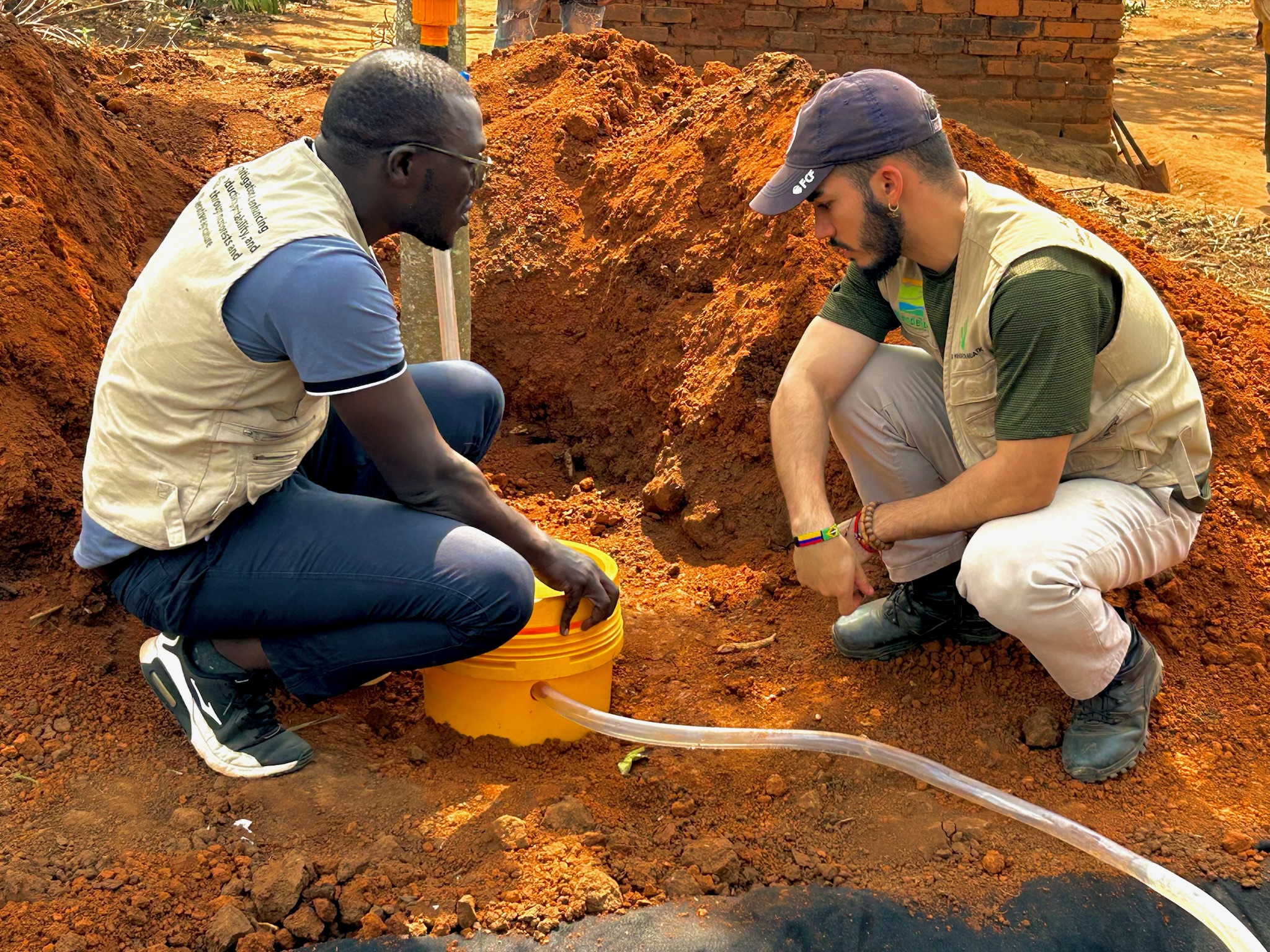
On learning from each other
HS: From before he even arrived, you could feel that Lorenzo wasn’t someone just moving through the system. He was deeply passionate about everything he dared to do. What I also admire and learn from every day is how he follows through. When Lorenzo connects with someone or something, he sees it all the way to the end. He doesn’t just attend a meeting — he goes back, digests it, makes sure there’s an update. He captures every moment in writing, in recordings, in photos. Nothing is wasted. And then there’s his strategic thinking. I might have the vision but not always know how to break it down. Lorenzo hears one word, writes it down, and suddenly the dots start connecting. He thinks in systems. In a short time, he can map the whole picture. I have also learned a lot about myself through him.
LPL: From Henry, I’ve learned to become a better listener. The thing that I most admire and try to continuously pick up from him is his natural gift for storytelling, his ability to listen and his natural leadership. He emphasizes viewing the work through the eyes of the farmer, through the eyes of the community — rooting everything we do in understanding how it’s going to [make an] impact at that level and always thinking about how we can empower the community. Understanding from him how to build trust, show deep compassion and listening, and always centre and amplify the voices of those on the ground has been incredibly impactful.
Learn more about Global Citizens 2026 and read the rest of the special issue.