Ella Cusack has a superpower, but it’s not the type you’d see in a Marvel film.
By Caro Rolando
“I’ve always been quite shy,” the 18-year-old Bachelor of Health student says. “And along with that comes with me being really, really sensitive.”
Cusack’s sensitivity made her aware of inequality from the time she was in elementary school. Growing up in Saint John, New Brunswick, she remembers noticing kids who didn’t have anyone to hang out with at recess, and others who came to school without having had breakfast.
“I remember seeing people feeling left out or sad, and I would really empathize,” she recalls.
By the time she was in middle school, Cusack realized that what she saw on the playground was tied to bigger issues that exist all over the world — like food insecurity, access to education, and mental health. Instead of despairing, she realized that “change can actually occur if you care enough.”
Since then, Cusack has been working tirelessly to reduce inequality both locally and globally. Here are just a few of the ways she uses her superpower for good.
Supporting people who are unhoused
Last summer, Cusack worked at Coverdale Centre for Women — a non-profit organization that supports women and families experiencing domestic violence, housing insecurity, or substance use issues. Cusack supported the centre by helping staff with communications, and by accompanying women to medical appointments, errands, and the food bank. “To just be around [them] was just proof to me that it was what I want to do with my life,” Cusack says, adding that she admired the friendships the women had built with one another. “The women there were lovely. They were hilarious. I think they really appreciated having someone younger who showed interest in them and also stayed.”
Doing research that supports community well-being
Cusack was first introduced to the power of research when she took an advanced placement seminar at school. It was there that she developed a passion for research, hoping it would make a difference. Her research on cardiopulmonary resuscitation (CPR) in schools led to conversations with the Heart and Stroke Foundation and the Department of Education in New Brunswick. “It was super cool to see my work talked about by [the people] who can actually do something about it,” she says. Cusack has also conducted research on domestic partner violence during the COVID-19 epidemic, invasive species in the Great Lakes region, and providing economic opportunities for women with disabilities.
Joining a Youth Advisory Committee
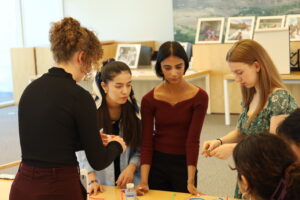
Cusack is among the 16 young people who make up Aga Khan Foundation Canada’s Youth Advisory Committee. The group ensures that youth perspectives are integrated throughout the organization’s programs in Canada. For Cusack, the experience has been transformative. “To engage and collaborate with like-minded youth for tangible change is everything to me,” she says. “I am eager to pursue a career that lends me to a broader range of knowledge and diversity, and helps create youth-focused policies that advance the Sustainable Development Goals.”
Encouraging empathy
For Cusack, empathy is the root of social action. “I feel there is a little bit of a lack of empathy that is really, really problematic right now in our community or just in the world in general that needs to be amended,” she shares. Her solution? Take the time to get to know members of your community. This helps reduce stigma, challenges your lens, builds empathy, and ultimately, is critical to making a difference.
This article was originally published in Global Citizens 2026, a special issue of Canadian Geographic magazine that explores how youth, educators, and communities are engaging with global challenges and opportunities in an increasingly interconnected world.