Leadership Lens is a series of Q&As with participants and alumni from AKFC’s Global Leadership Program. From artists to philanthropists, finance executives to medical doctors, AKFC’s Global Leaders are all dedicated to strengthening Canada’s role in addressing global and local issues, and building a more prosperous, peaceful, and pluralistic world.
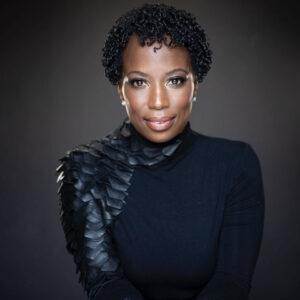 Celina Caesar-Chavannes is a visionary leader at the intersection of neuroscience, leadership, and social transformation. Currently a PhD candidate in Neuroscience at Queen’s University, her research explores how cognitive and emotional processes influence leadership, decision-making, and self-actualization. She applies these insights through The Awakened Leadership Institute (TALI), which she founded in 2024 to equip individuals and organizations with neuroscience-backed strategies for authentic leadership, fostering self-awareness, well-being, and transformation. A trailblazer in politics, Celina served as the Member of Parliament for Whitby, where she held key roles, including Parliamentary Secretary to both Prime Minister Justin Trudeau and the Minister of International Development. To learn more about Celina, visit her website.
AKFC: To begin, could you introduce yourself and share what you’d like people to know about you?
Celina Caesar-Chavannes: My name is Celina Caesar‑Chavannes, and I am a neuroscientist. Most people know me as a former politician, but I have studied the brain for years, and that’s where I started my career. What I want people to know about me most is that I love the brain. Although politics seems to be consuming a lot of oxygen, it was less than 10% of my life. I’m so much more than just that small period of my life.
AKFC: How did you first become involved with the Global Leadership Program?
CCC: I got an invitation two years ago to participate [in the pilot program]. I was really intrigued by it, because when I was in politics as the Parliamentary Secretary for International Development, I had a lot of interaction with Aga Khan Foundation Canada. So, it seemed like a great opportunity to engage more with the Foundation in a way that allowed me to learn not just about some of the work that they were doing, but about global leadership. Of course, I arrived there — like so many others — and felt like, “What am I doing here? I’m not qualified to be in this room with all these people!” And that was immediately dismissed because everybody felt like that. It was this great learning and camaraderie, and [we became] great friends.
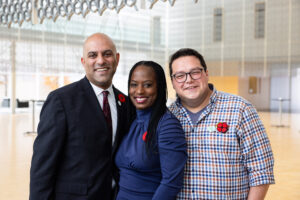
AKFC: You returned to the program as a faculty member in November 2025. What was that experience like?
CCC: Coming back was great. It was wild for me that all these equally smart people were going to listen to me talk about something…I was petrified! But then you recognize that they’ll ask you challenging questions, and that’s OK. That’s what the leadership program is supposed to be [about]. You’re supposed to be challenged. You’re supposed to be pushed to think differently. It’s just relationship building, and understanding that you belong, that I belong, that we [all] belong in this world. And that as leaders, we have the capacity to make really important decisions that could change people’s lives.
AKFC: What do you hope this cohort takes away from your session?
CCC: I hope that they take from my session the ability to understand how we make decisions a little bit better. Such that when we’re in these VUCA environments [environments characterized by volatility, uncertainty, complexity and ambiguity], we’re not second guessing ourselves, and not being afraid of our ability to really have impact.
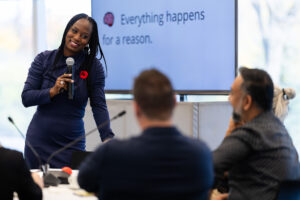
AKFC: What keeps you motivated?
CCC: I would say our ability to connect. A lot of the reactions that we’re seeing are because people feel isolated and they feel afraid. One of the ways to get around that is to form connections, and that gives me hope. As long as we stay connected, as long as we remember community, as long as we remember that we have each other, we can maintain our collective humanity.
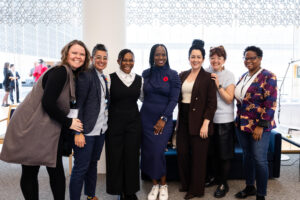
AKFC: Why do programs like the Global Leadership Program matter?
CCC: The more we’re connected, the better. Individually, we could do some great things, but collectively, we could do amazing things. Understanding different viewpoints is a cognitive tool that allows us to be more humble and more vulnerable. I think this program really helps us to rewire our brains because you walk in and you’re like, “Wow, look at all of these amazing people! Who am I?!” And if that happens in a room where you’ve been selected, it’ll happen in other spaces. So allowing us to have that confidence to say, “You are the light that the world needs. Now go shine.”
This interview has been edited for length and clarity.
Celina Caesar-Chavannes is part of AKFC’s Global Leadership Program faculty, and an alumna of the 2024 cohort. Learn more about the program here.