What does a truly mutual economic partnership look like, and what role can Canada play in building them?
On September 29, AKFC and the International Development Research Centre convened Building Mutual Economic Partnerships: Canada’s Role in a Shifting Global Economy, the inaugural public event in the Shared Futures dialogue series.
At a moment of significant change in global trade, development, and international cooperation, the conversation explored how Canada could build partnerships that advance shared prosperity while remaining grounded in development outcomes, local priorities, and mutual benefit.
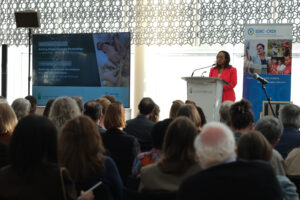
In her keynote address, Pamela Coke-Hamilton, Executive Director of the International Trade Centre, reflected on the need to rethink traditional relationships between trade, aid, investment, and development. She also pointed to Canada’s reputation for trust and its role as an “honest broker” as important strengths in navigating a rapidly changing global environment — and an opportunity for Canada to help bring countries together around new approaches to international cooperation.
As she reminded the audience: “The entire international architecture now needs to change.”
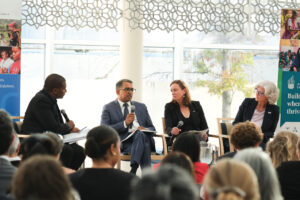
A panel discussion moderated by journalist and professor Adrian Harewood brought together Kate Higgins, CEO of Cooperation Canada; Lori Kerr, CEO of FinDev Canada; and Yiagadeesen (Teddy) Samy, Director of the Norman Paterson School of International Affairs at Carleton University.
Together, they explored some of the difficult questions at the heart of this emerging agenda: Who defines mutual benefit? How can partnerships account for different local contexts and priorities? What roles should development assistance, private capital, trade, and investment play? And how can Canada pursue its economic interests while keeping poverty reduction and sustainable, inclusive development at the core?
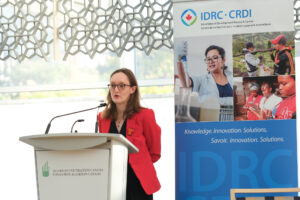
In her closing reflections, Catherine Jobin, Assistant Deputy Minister for Strategy, Policy and Public Affairs at Global Affairs Canada, observed that, despite the profound changes in the global landscape, she observed that “the concepts that we are invoking are concepts that have been the foundation of good international development cooperation, of aid effectiveness for decades—concepts of country ownership, of drawing out and including marginalized voices.” Canada, she concluded, can exercise leadership by showing that it is possible to seek mutual economic benefits while adhering to the core principles of global development and poverty alleviation.
The discussion underscored that there is no single model for mutual economic partnership. Building partnerships that deliver meaningful benefits in both Canada and partner countries will require listening, experimentation, evidence, and collaboration — as well as a willingness to learn and adapt along the way.

Missed the event? Watch the recording:
Shared Futures is a new dialogue series from AKFC and IDRC bringing together leaders from research, policy, and practice to explore Canada’s role in a rapidly changing and interconnected world.
Sign up to our mailing list for updates on upcoming Shared Futures conversations and other AKFC events.